
By: Blessing Iriaka
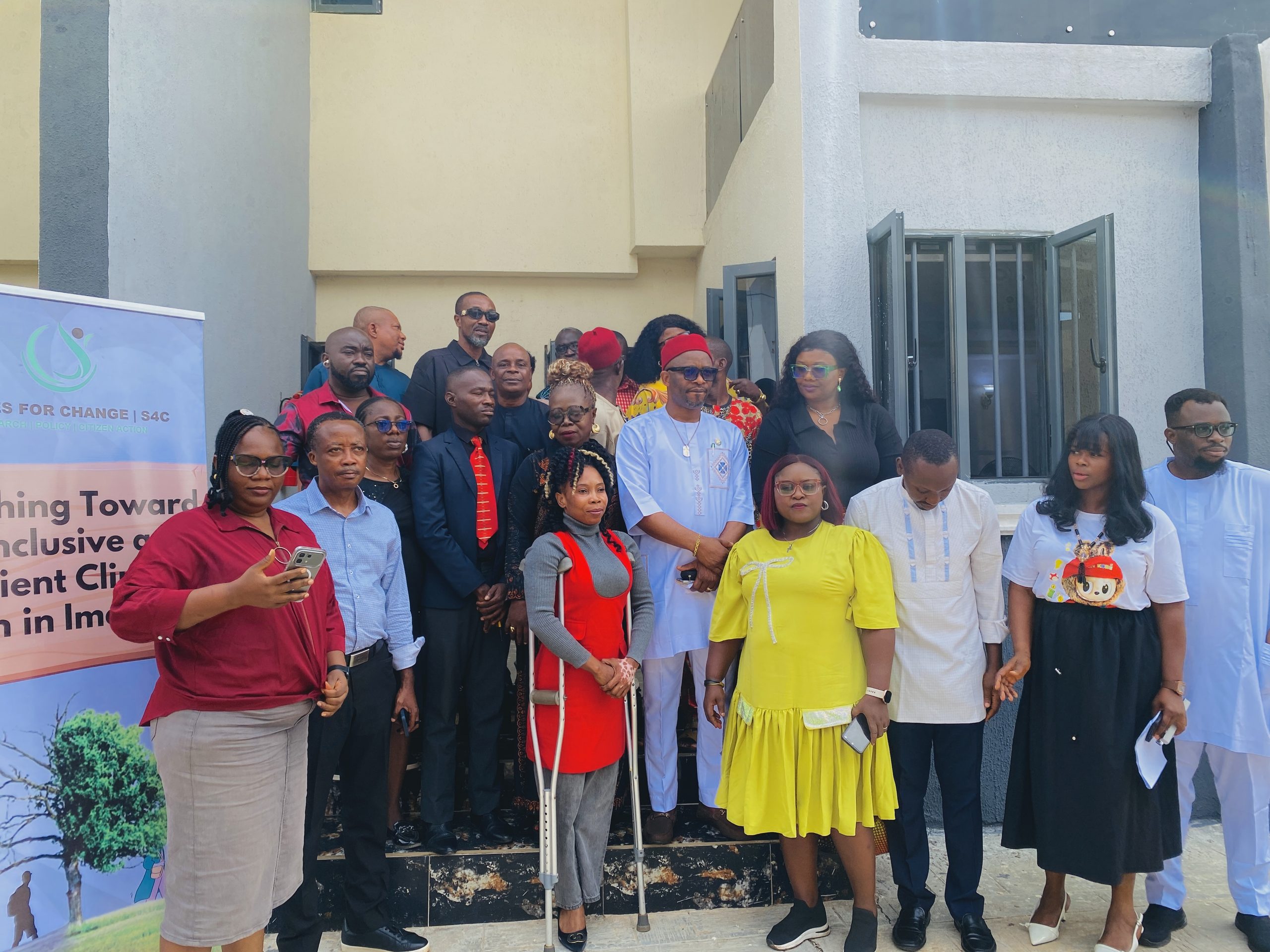
Owerri, Imo State — Efforts to develop a comprehensive Climate Action Plan for Imo State received a major boost on Tuesday, May 26, 2026, as key stakeholders from government institutions, civil society organizations, the petroleum sector, environmental groups, and development partners gathered in Owerri for a Climate Action Stakeholders’ Steering Meeting convened by Spaces for Change (S4C).
The meeting, the third in a series of engagements by the Imo State Climate Action Committee, focused on charting a practical roadmap for addressing growing environmental challenges such as erosion, flooding, pollution, gas flaring, and the wider impacts of climate change on communities across the state.
Over the years, Imo State has grappled with severe gully erosion, recurrent flooding and environmental degradation linked to extractive activities. Several communities have witnessed the loss of farmlands, homes and critical infrastructure, while changing weather patterns continue to threaten livelihoods. Stakeholders at the meeting agreed that these challenges require coordinated action backed by policy reforms and sustained investment.
Speaking on behalf of the Executive Director of Spaces for Change, Barr. Victoria Ibezim-Ohaeri, the organization’s Community Mobilisation Officer, Mrs. Jecinta Mbamara, said the committee’s engagements were designed to produce a sustainable and actionable framework capable of tackling the state’s environmental and public health concerns.
She emphasized that collaboration among government agencies, civil society groups, technical experts and development partners remains critical to ensuring that climate solutions are practical, inclusive and responsive to the needs of local communities.
In his presentation, Dr. Julian Chijioke, Team Lead at Spaces for Change, highlighted Imo State’s strategic importance in Nigeria’s oil and gas industry. While acknowledging the economic opportunities associated with the state’s natural resources, he stressed the need for responsible resource management that balances economic growth with environmental protection.
The discussion gained further traction when a participant from the petroleum sector disclosed that Imo State has approximately 340 oil wells, a figure significantly higher than estimates often cited in public discussions. The revelation underscored the scale of extractive activities within the state and reinforced calls for stronger environmental safeguards and climate-conscious development policies.
Providing insights from experiences across the country, consultant and resource person, Engr. Temple Oraeki, presented successful climate action initiatives implemented by other Nigerian states. He urged members of the committee to draw lessons from these models while designing a policy framework tailored to Imo State’s unique environmental realities.
Representatives from the Ministry of Petroleum, Ministry of Agriculture, civil society organizations, environmental advocacy groups and development partners participated actively in the deliberations, bringing diverse perspectives to the discussions.
Participants identified a range of pressing environmental concerns requiring urgent intervention, including widespread erosion, flooding, gas flaring, fossil fuel emissions, environmental pollution and the increasing vulnerability of communities to climate-related disasters.
Many speakers expressed concern over the pace of environmental degradation and warned that failure to act decisively could worsen public health challenges, economic losses and ecological damage in the years ahead.
Renewable energy emerged as a central theme during the meeting, with stakeholders advocating increased investment in clean energy solutions as a pathway to reducing emissions, promoting sustainable development and creating new economic opportunities.
Also speaking at the meeting, Hon. Innocent Ikpamezie, member representing Mbaitoli State Constituency in the Imo State House of Assembly and a member of the Climate Action Plan Committee, assured participants of legislative support for the initiative.
According to him, the Assembly is closely monitoring the development of the Climate Action Plan and stands ready to consider policy recommendations that will strengthen environmental governance and climate resilience in the state.
In a closing remark, Barr. Victoria Ibezim-Ohaeri, Founder and Executive Director of Spaces for Change, stressed that addressing climate change requires collective responsibility and sustained stakeholder engagement.
She noted that collaborative platforms such as the steering committee meeting provide an opportunity for government agencies, civil society organizations and citizens to jointly shape solutions that will protect communities and secure a healthier environment for future generations.
The Climate Action Plan, when completed, is expected to be presented to the Imo State House of Assembly to support the development of climate-related legislation and policy reforms. The proposed framework will seek to strengthen climate adaptation measures, promote sustainable environmental practices, improve public awareness of climate issues and encourage the adoption of renewable energy alternatives.
As climate-related risks continue to intensify across Nigeria, stakeholders at the meeting agreed that Imo State has an opportunity to position itself as a leader in climate-responsive governance through policies that protect both the environment and the people who depend on it.
The meeting concluded with a renewed commitment from participants to work collectively toward a practical, inclusive and results-driven Climate Action Plan capable of safeguarding Imo State’s environment and enhancing resilience in the face of a changing climate.